




_936.png "How to Choose the Best Outdoor Bike Rack for Your Business")
Providing commercial access to bike parking isn’t just a nice amenity — it’s an expectation today. Whether you manage a retail center, HOA, office campus, school, or municipal property, the right outdoor bike rack improves customer experience, reduces clutter, and supports sustainable transportation.
But selecting a commercial outdoor bike rack that truly fits your needs requires considering several key factors — including mounting options, materials, rack types, capacity, and placement. With so many options available today, we’re here to help you decide which type makes the most sense for you. This guide will walk you through how to evaluate these elements so you can choose the best bike rack for your business or property.
Outdoor Bike Rack Mounting Options: In-Ground, Surface Mount, Portable
Choosing the right mounting option is one of the first steps in selecting a commercial bike rack. Mounting affects security, durability, installation cost, and long-term performance.
In-Ground Bike Racks: Maximum Security and Permanence
.png)
In-ground outdoor bike racks are permanently embedded into concrete footings. Because they cannot be easily removed or tampered with, they offer the highest level of theft resistance and stability.
This makes in-ground racks ideal for:
- Transit hubs
- Downtown retail districts
- Schools and universities
- Corporate campuses
If you need a long-lasting, secure bike parking solution where theft prevention is critical, in-ground mounted racks are often the best choice.
Surface Mount Bike Racks: Strong and Flexible
.png)
Surface mount bike racks install quickly and securely onto existing concrete using heavy-duty anchors. They provide excellent stability and can be replaced or repositioned more easily than in-ground racks.
Surface-mount bike racks are a strong choice for:
- Retail storefronts
- Apartment communities
- Office entrances
- Parks and public plazas
For many businesses and properties, surface mount racks offer the ideal balance of security, ease of installation, and flexibility.
Portable Bike Racks: Easy Setup for Temporary Needs
Portable or free-standing bike racks don’t require drilling or anchoring. They can be moved as needed, making them ideal for:
- Event spaces
- Seasonal use
- Temporary installations
While portable racks are less theft-resistant than in-ground or surface mount options, they are perfect when flexibility and low installation cost are priorities.
Material Choices: Steel vs Recycled Plastic Bike Racks
Selecting the right material for your outdoor bike rack affects its longevity, maintenance, and appearance. The two most common materials used in commercial outdoor bike parking are steel and recycled plastic.
Steel Bike Racks: Durable, Secure, Long-Lasting
Steel is the most widely used material for commercial outdoor bike racks due to its strength and reliability. Benefits of steel bike racks include:
- High impact resistance
- Excellent theft deterrence
- Long lifespan
- Rust-resistant finishes (powder coating or galvanized)
Steel racks paired with quality mounting deliver some of the strongest and most secure commercial bike parking available. They are ideal for properties with high traffic and long-term bike parking needs.
Recycled Plastic Bike Racks: Sustainable, Weather-Resistant
Recycled plastic bike racks offer a great option for environmentally conscious properties. These racks:
- Don’t rust or corrode
- Withstand moisture and freeze/thaw cycles
- Require minimal maintenance
Recycled plastic is especially well-suited for parks, nature centers, and campuses where eco-friendly amenities are a priority.
While recycled plastic doesn’t match steel in heavy-duty security applications, it performs exceptionally well in lower-risk or aesthetic-focused installations.
Which Bike Rack Style Is Best? Loop, Grid, and More
Understanding bike rack types helps you choose the right style for both cyclists and your space.
Loop Bike Racks: Simple, Secure, and Easy to Use

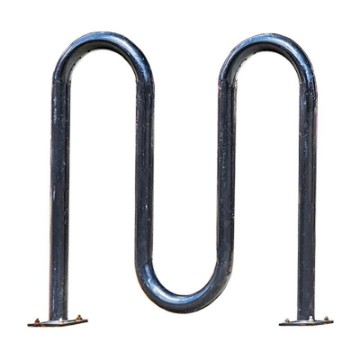
Loop racks (also called hoop or inverted-U racks) are among the most popular commercial outdoor bike rack styles. Cyclists can easily lock both the frame and wheel, providing superior security. Loop bike racks are ideal for:
- Retail areas
- Office buildings
- Restaurants
- Hotels
They come in multiple sizes and are available in surface mount or in-ground configurations. Because they are intuitive and easy to use, loop racks often encourage more people to bike.
Grid Bike Racks: Compact, High-Capacity Parking

Grid racks are designed to maximize bike capacity in a compact space. Their configuration allows bikes to be parked along each section of the grid, making them a strong choice for:
- Urban corridors
- Universities
- Community centers
- Transit stations
When paired with proper spacing, grid bike racks help you park more bikes without crowding your site.
Low Profile Bike Racks: Sleek, Space-Saving, and Subtle
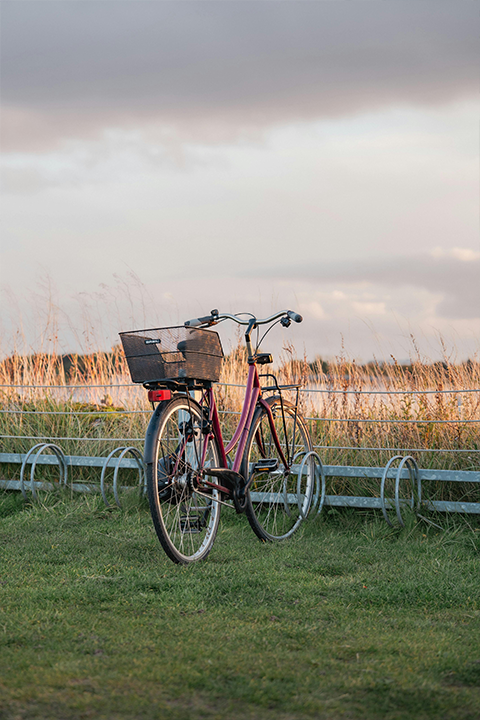
If you’re looking for a subtle bike parking solution, low profile racks are an excellent option. Low-profile styles are ideal where aesthetics are a priority — such as:
- Courtyards
- Plazas
- Outdoor seating areas
- Historical site
These racks sit closer to the ground and feature a smaller visual presence while still providing secure locking points.
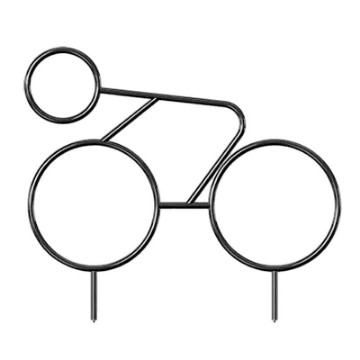
Unique Shapes & Logo Racks: Custom, Eye-catching, and Advertising
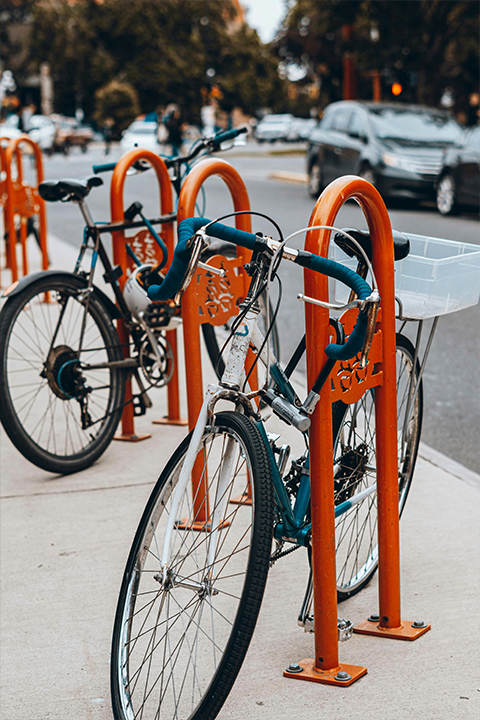
For businesses that want to reinforce branding or create a distinct look, custom or themed bike racks offer unmatched visual impact. Unique shapes and logo racks serve as both functional bike parking and public art, making them great for:
- Creative districts
- Cultural institutions
- Hospitality venues
- Cityscapes
These can be fashioned into logo shapes, business icons, local landmarks, or custom designs that reflect your brand identity.
How to Plan Bike Rack Capacity and Length
Estimating the right size and number of bike racks helps you avoid overcrowding, wasted space, or insufficient parking.
Why Capacity Matters
Bike rack capacity refers to how many bicycles can be parked and securely locked. A common mistake is selecting a rack based solely on length — without accounting for spacing between bikes.
To ensure comfortable use:
- Allow 24–30 inches of width per bike
- Provide 36 inches of clearance in front of the rack
- Avoid compressing bikes too tightly
This spacing allows cyclists to move their bikes in and out without tangling handlebars or pedals.
Estimating Rack Length for Your Site
Rather than picking a rack size arbitrarily, consider how many bikes you expect during peak hours.
Example guidance:
Rack Length | Typical Capacity* |
4 ft | 4–6 bikes |
6 ft | 6–10 bikes |
8 ft | 8–14 bikes |
*Actual capacity depends on rack style and spacing. Increase capacity by installing multiple racks with proper clearance.
For larger properties, plan to mix rack types and lengths to maximize utility and space efficiency.
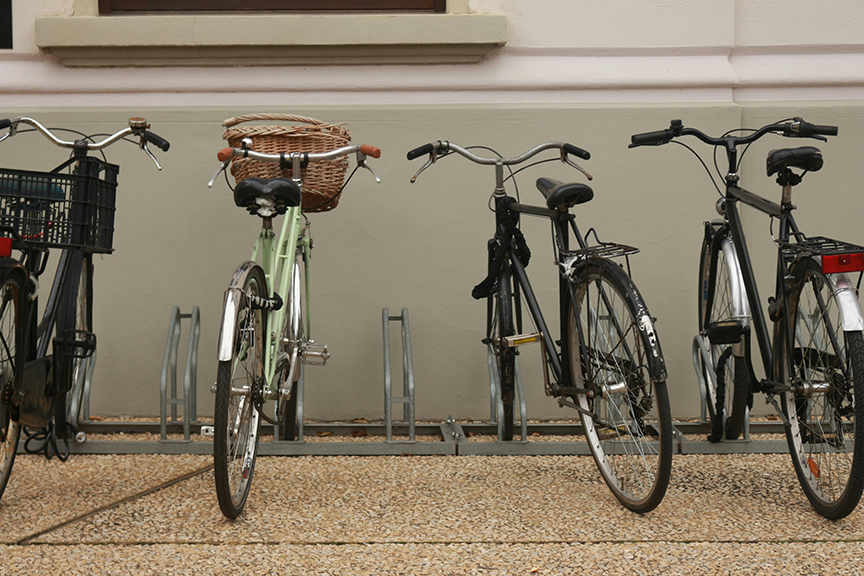
Placement and Visibility: Where to Install Your Bike Rack
Even the best outdoor bike rack won’t perform well if it’s hidden or hard to reach. Strategic placement improves security, usability, and visibility.
Place bike racks:
- Near building entrances and high-traffic pathways
- In well-lit areas
- Away from vehicle traffic
- Where they are easily seen and accessible
Good placement increases usage and signals to cyclists that your business supports active transportation.
Make Your Outdoor Bike Parking Work for You
There’s no one-size-fits-all bike rack. A bustling retail district might benefit from robust, in-ground mounted loop racks with welded steel for maximum capacity and security. Meanwhile, a community park could opt for surface-mounted recycled plastic grid racks for eco-friendly appeal and easy installation. Custom low profile and logo-shaped options can add branding and visual interest where aesthetics matter.
Understanding the differences in mounting, materials, rack styles, and capacity ensures your investment meets both functional needs and user expectations. With thoughtful planning, your business can provide safe, durable, and attractive bike parking that encourages cycling and enhances visitor experience.
Need Help Choosing the Right Bike Rack?
Park Tables offers a range of commercial outdoor bike rack solutions, including in-ground, surface mount, and portable options in steel or recycled plastic. From loop racks to high-capacity grids, we can help you find the perfect fit for your property.



Leave your comment