


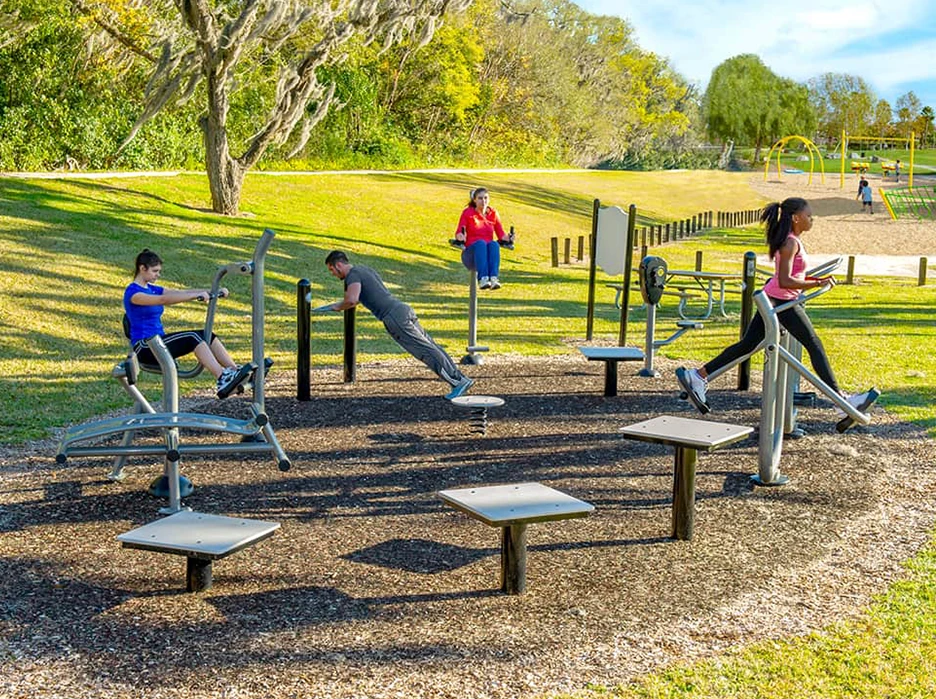
Outdoor park fitness equipment brings commercial-grade workout opportunities to parks, schools, campgrounds, HOAs, and public recreation areas. From cardio stations and strength equipment to flexibility and balance training, modern outdoor fitness systems are designed to support full-body workouts in open-air environments.
Understanding the different types of outdoor fitness equipment is essential when planning a space that encourages consistent use. Each category serves a unique purpose, and combining multiple equipment types helps create a well-rounded outdoor gym that supports a wide range of users and fitness levels.
Why Outdoor Fitness Equipment Is a Smart Investment
Installing outdoor workout equipment transforms underutilized spaces into active destinations. These fitness areas encourage healthier lifestyles, increase park engagement, and provide accessible exercise options without the need for indoor facilities.
Commercial-grade outdoor fitness equipment is built for durability, low maintenance, and long-term use in public settings. Whether placed along walking trails or in centralized fitness zones, these installations help create lasting value for communities and properties alike.
1. Cardio Outdoor Fitness Equipment
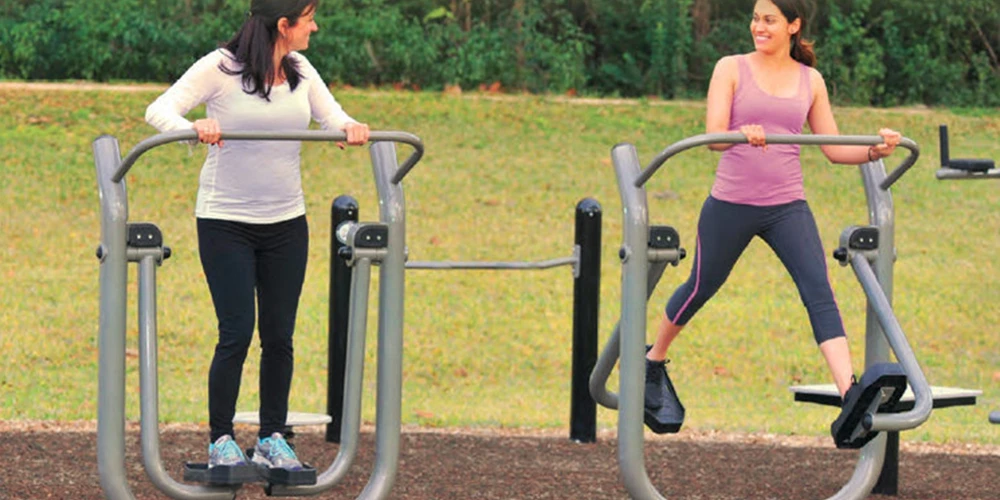
Cardio equipment is designed to improve endurance, circulation, and overall cardiovascular health through continuous movement. These stations are typically low-impact, making them approachable for a wide range of users.
Common cardio equipment includes:
Cardio stations are ideal for parks, trails, apartment communities, and recreation areas where users may be looking for accessible, easy-to-use workout options.
2. Upper-Body Strength and Bodyweight Equipment
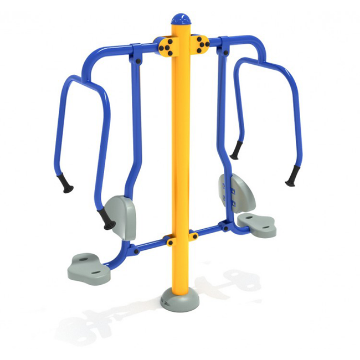
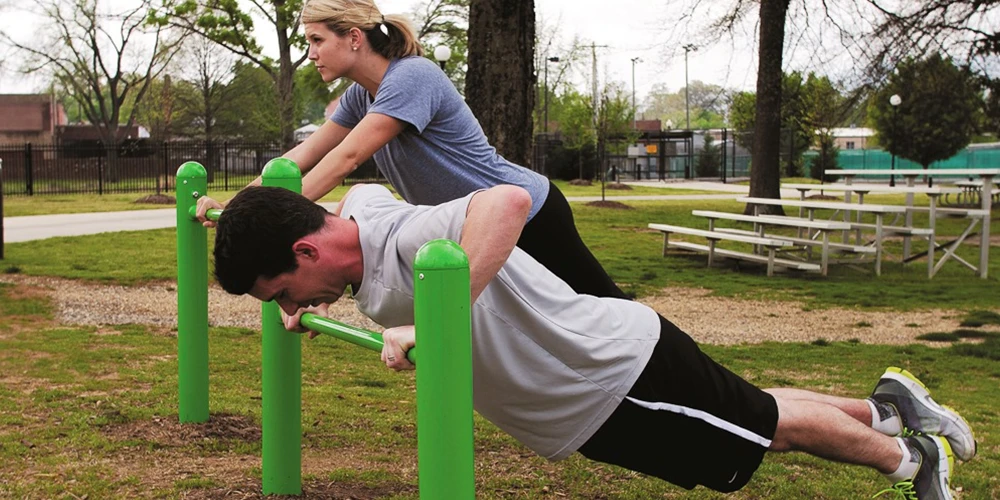
Upper-body fitness equipment focuses on building strength through pushing, pulling, and lifting movements. Many of these stations use bodyweight resistance, making them versatile and effective for both beginners and experienced users.
Common upper-body equipment includes:
- Pull-up and chin-up bars
- Parallel bars and dip stations
- Push-up stations
- Horizontal and climbing ladders
- Chest press and lat pull-down stations
This type of equipment is commonly used in parks, school campuses, and athletic areas where users want more challenging strength-building options.
3. Lower-Body Strength Equipment
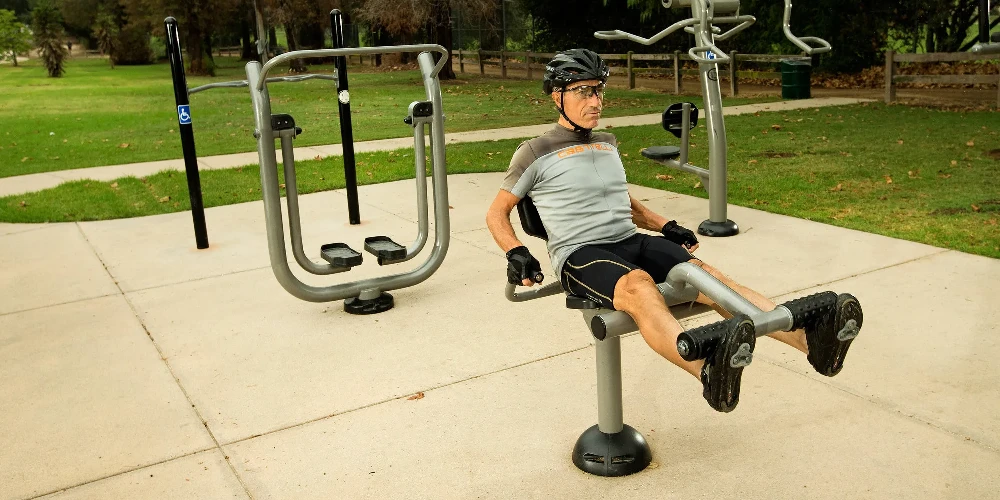
Lower-body fitness stations are designed to strengthen the legs, hips, and glutes. These pieces help balance out upper-body training and contribute to a more complete workout routine.
Examples of lower-body strength equipment include:
Adding lower-body equipment ensures users can perform more balanced workout routines without needing additional facilities, making outdoor fitness spaces more effective and appealing.
4. Core Training Equipment
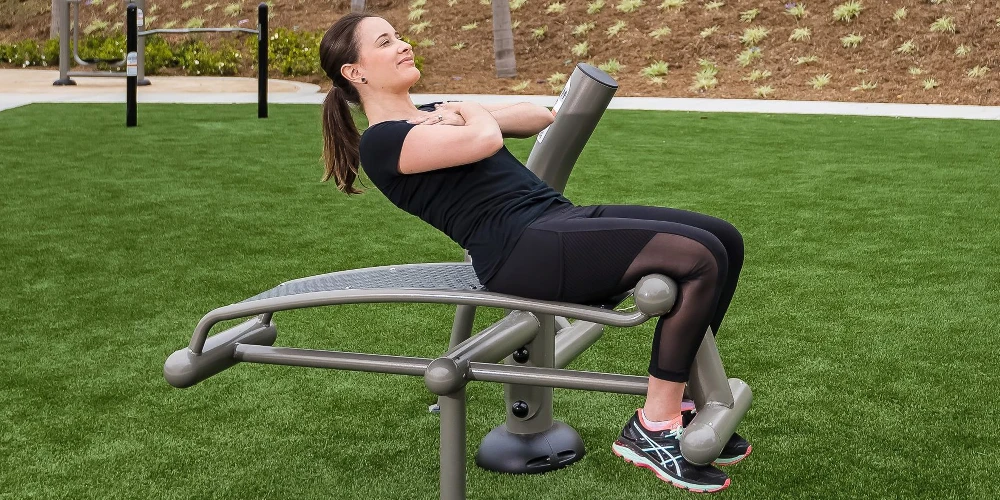
Core-focused equipment helps improve stability, posture, and overall functional strength. These stations are often simple in design but highly effective when incorporated into a circuit-style workout.
Core equipment may include:
Core training equipment complements both cardio and strength areas, helping users build a more balanced fitness routine.
5. Flexibility and Mobility Equipment
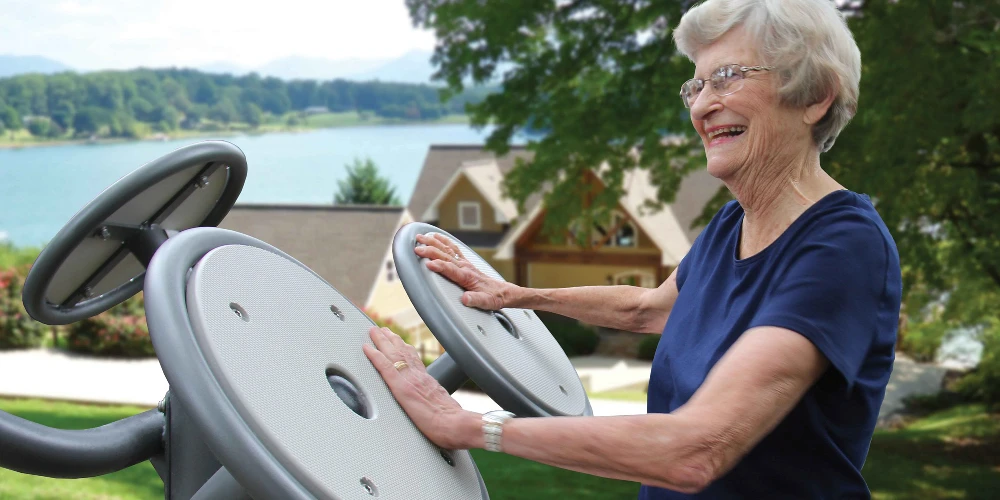
Flexibility and mobility stations support warm-ups, cool-downs, and recovery. These pieces are especially valuable in public fitness spaces where users may have varying experience levels.
Examples include:
- Stretching posts
- Hamstring stretch stations
- Shoulder and arm rotation stations
- Back massage units
- Tai chi movement stations
Including mobility-focused equipment helps create a more inclusive fitness area that supports long-term health and injury prevention.
6. Balance and Coordination Equipment
Balance equipment is designed to improve coordination, stability, and control. These stations are often used for both athletic training and low-impact wellness activities.
Common balance equipment includes:
This category is especially useful in multigenerational spaces, supporting both younger users and older adults.
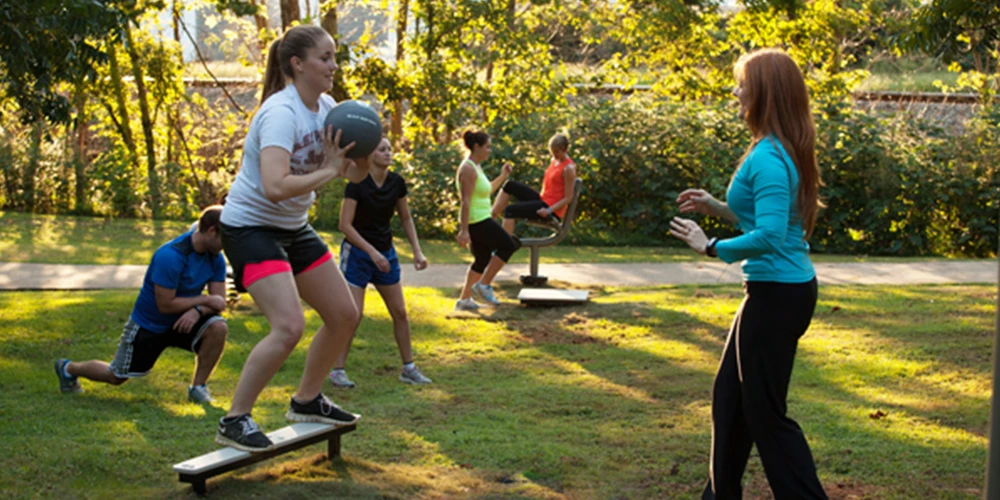
7. Accessible Outdoor Fitness Equipment
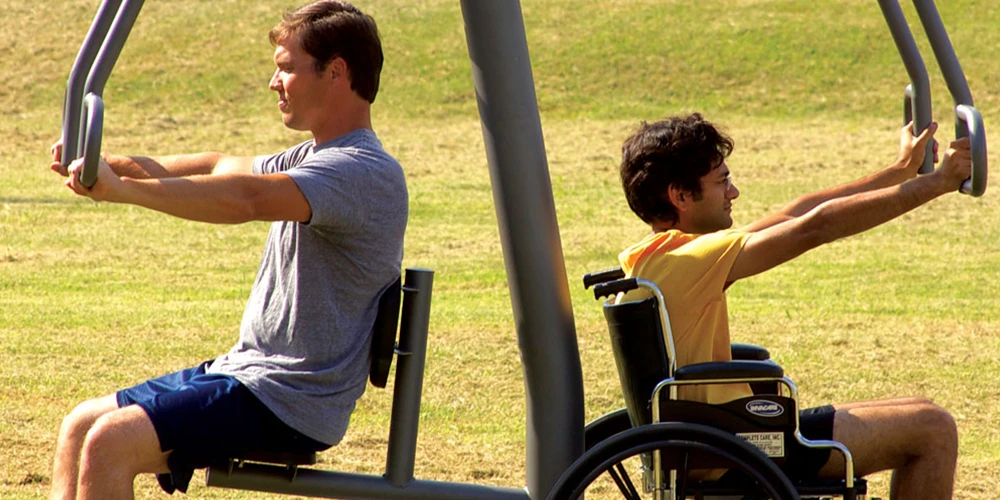
Accessible fitness equipment helps outdoor exercise spaces serve a wider range of users. These stations are designed to support usability, inclusivity, and a more welcoming fitness environment in parks, schools, and community spaces.
Examples of accessible outdoor fitness equipment include:
Including accessible equipment helps create more inclusive fitness environments while expanding usability for individuals of varying mobility levels and fitness abilities.
8. Kids’ Outdoor Fitness Equipment
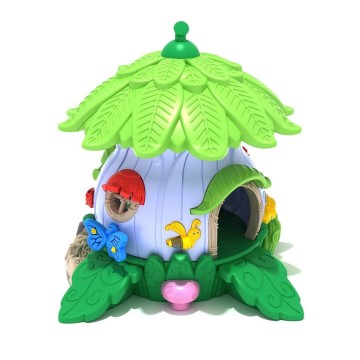
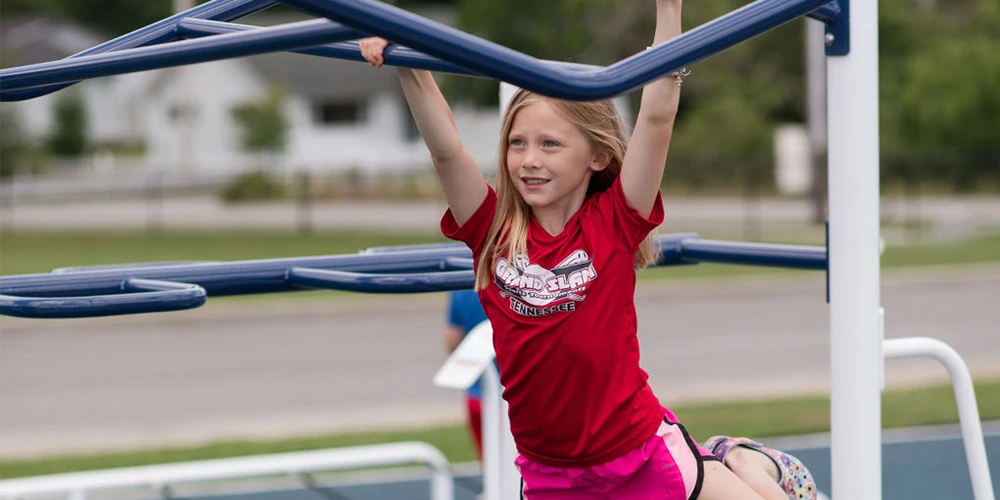
Youth-focused fitness equipment encourages movement, coordination, and strength development in a fun and engaging way. These pieces are often placed near playgrounds or family recreation areas where active play and fitness can work together.
Examples of kids’ outdoor fitness equipment include:
Including equipment designed for children helps create a more family-friendly environment while promoting active lifestyles and physical development at an early age.
Compare Outdoor Fitness Equipment Types
| Equipment Type | Primary Purpose | Best Fit For |
|---|---|---|
| Cardio Equipment | Endurance and movement | Parks, trails, HOAs |
| Upper-Body Strength | Muscle development | Schools, parks, athletic areas |
| Lower-Body Strength | Leg and lower-body training | Full fitness layouts |
| Core Equipment | Stability and posture | Circuit fitness areas |
| Flexibility Equipment | Mobility and recovery | Public parks, senior spaces |
| Balance Equipment | Coordination and control | Multigenerational spaces |
| Accessible Equipment | Inclusive fitness access | Public and community spaces |
| Kids’ Equipment | Youth activity and development | Schools and playground areas |
How to Choose the Right Equipment Mix
The most effective outdoor fitness areas combine multiple equipment types to serve a wide range of users. Cardio stations attract general users, strength equipment adds challenge, and flexibility or balance elements support recovery and accessibility.
When planning a layout, consider user demographics, available space, and how each station will flow within the environment. A well-balanced setup encourages longer use and creates a more engaging outdoor fitness experience.
Where Outdoor Fitness Equipment Works Best
- Public parks and recreation areas
- School campuses and universities
- HOA communities and apartment complexes
- Campgrounds and resort properties
- Community wellness and sports areas
Frequently Asked Questions
What types of outdoor fitness equipment are most common?
Common types include cardio stations, bodyweight strength equipment, sit-up benches, stretching stations, and balance-focused fitness elements.
How long does outdoor fitness equipment last?
Commercial outdoor fitness equipment is designed for durability and can last many years with proper installation and maintenance.
Is outdoor fitness equipment suitable for all ages?
Yes. Many outdoor fitness areas are designed to support multiple age groups, including adults, seniors, and children.
Design a More Engaging Outdoor Fitness Space
Choosing the right types of outdoor park fitness equipment helps create a space that encourages activity, supports community health, and delivers long-term value. A balanced mix of cardio, strength, flexibility, and inclusive equipment ensures your fitness area remains useful, inviting, and well-utilized.
For help selecting the right equipment for your space, explore available options and choose a layout that fits your users, goals, and environment.



Leave your comment