




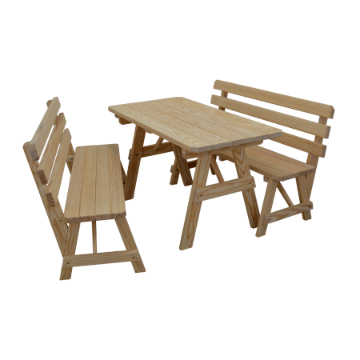

Outdoor fitness parks have become a popular addition to public parks, schools, apartment communities, universities, military bases, campgrounds, HOA recreation areas, and senior living facilities. Commercial outdoor workout equipment gives people an opportunity to stay active outdoors while promoting healthier lifestyles within the community.
However, not all outdoor fitness equipment is designed for every age group.
One of the most important factors in planning a safe outdoor fitness area is understanding how age impacts the way users interact with equipment. Children, teenagers, adults, and seniors all have different levels of strength, balance, flexibility, coordination, mobility, and physical endurance. Equipment that may be safe for an athletic adult could create safety risks for a child or senior user.
Without proper planning, outdoor gym equipment can lead to preventable injuries, improper use, overcrowding, or accessibility concerns. That is why age-appropriate outdoor exercise equipment plays such an important role in creating safe, inclusive, and successful outdoor fitness parks.
Why Age-Specific Outdoor Fitness Equipment Matters
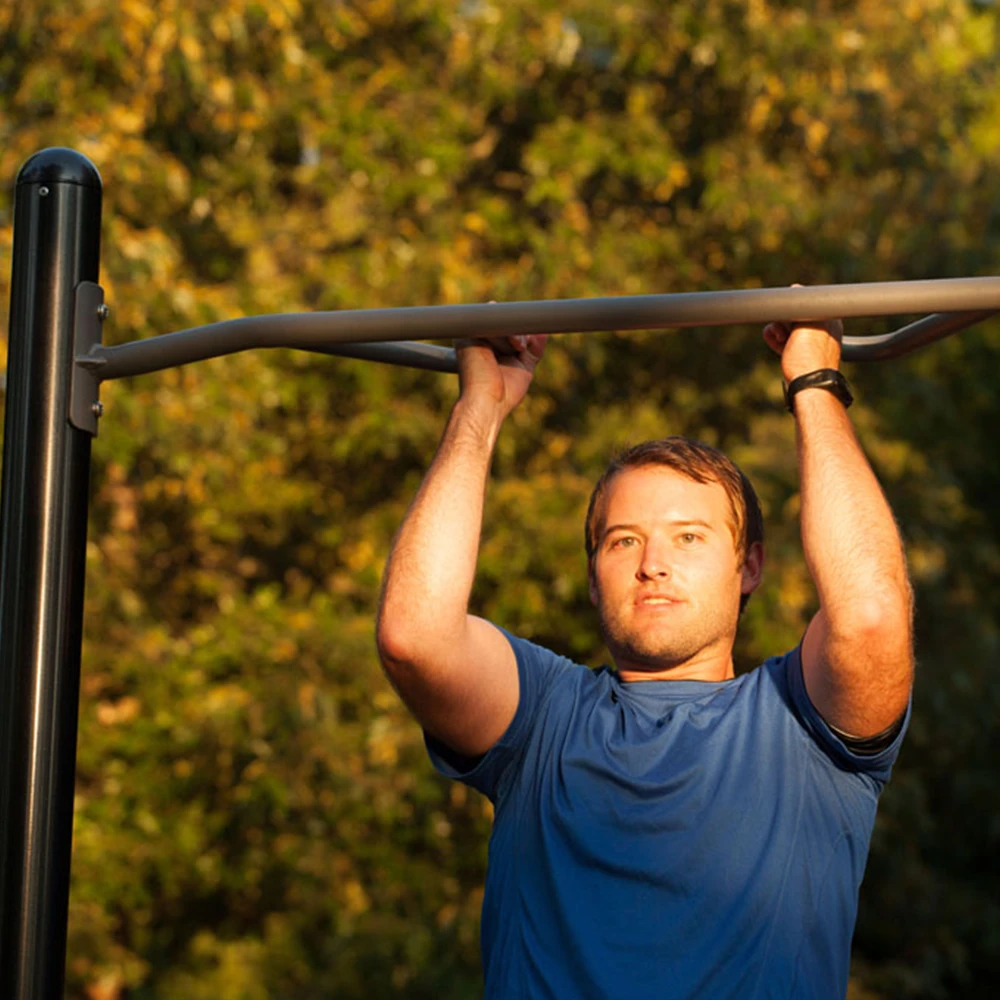 Commercial outdoor gym equipment is designed around body movement, grip reach, user height, balance, and resistance levels. Different age groups naturally interact with equipment differently based on their physical capabilities.
For example:
- Children often focus on movement, agility, and coordination
- Teenagers may seek more athletic or strength-based activities
- Adults typically use equipment for cardio and fitness training
- Seniors benefit from low-impact mobility and balance exercises
When outdoor workout equipment is selected without considering age demographics, safety risks can increase significantly.
Common risks include:
- Falls from elevated equipment
- Joint and muscle strain
- Misuse of equipment
- Overexertion
- Slips on unsafe surfaces
- Collisions between users
- Improper accessibility accommodations
Thoughtfully designed outdoor fitness parks help minimize these risks while creating a better experience for all users.
Safety Considerations for Children’s Outdoor Fitness Equipment
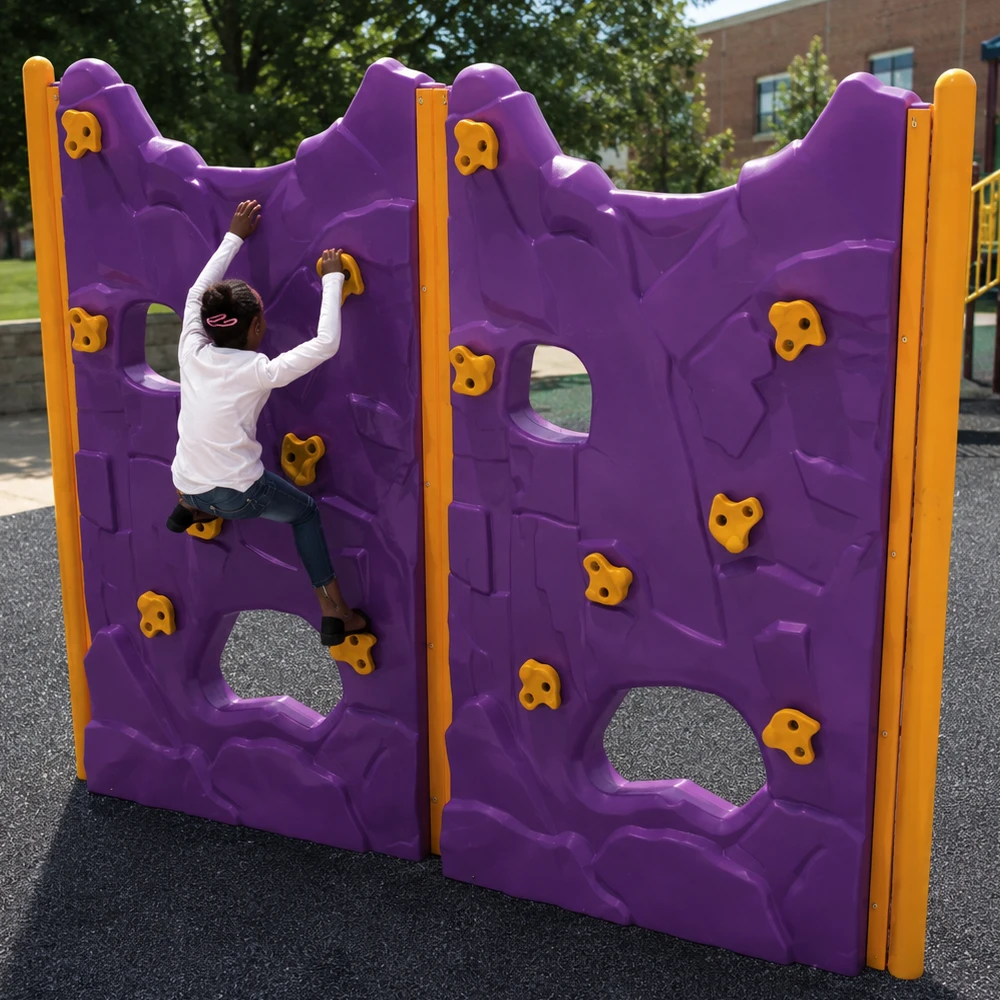
Children require outdoor fitness equipment specifically designed for smaller body sizes, developing coordination, and supervised physical activity. Unlike adult gym equipment, children’s fitness stations should emphasize balance, movement, agility, and motor skill development rather than heavy resistance exercises.
Outdoor fitness products commonly used for younger age groups include:
- Pebble stepping pads
- Pull-up climbing ladders
- Parallel bars
- Low-height balance beams
- Agility courses
- Junior pull-up stations
- Rope climbers
These types of outdoor exercise stations help children improve coordination, balance, and physical confidence in a safer environment.
Key Safety Features for Children
Lower Equipment Heights
Children’s equipment should remain closer to the ground to reduce fall-related injuries.
Smaller Grip Sizes
Hand grips and reach distances should accommodate smaller users comfortably.
Proper Fall Surfacing
Commercial playground surfacing materials such as poured-in-place rubber, rubber tiles, engineered wood fiber, or synthetic turf help improve safety beneath active fitness areas.
Clear Age Recommendations
Signage should identify recommended age groups and proper equipment use.
Supervised Layouts
Outdoor fitness stations for children should not be mixed directly beside advanced adult workout equipment.
Installing oversized adult fitness equipment near children’s recreation areas can create unnecessary safety hazards due to larger movement ranges and strength requirements.
Why Teenagers and Adults Need More Advanced Outdoor Workout Equipment
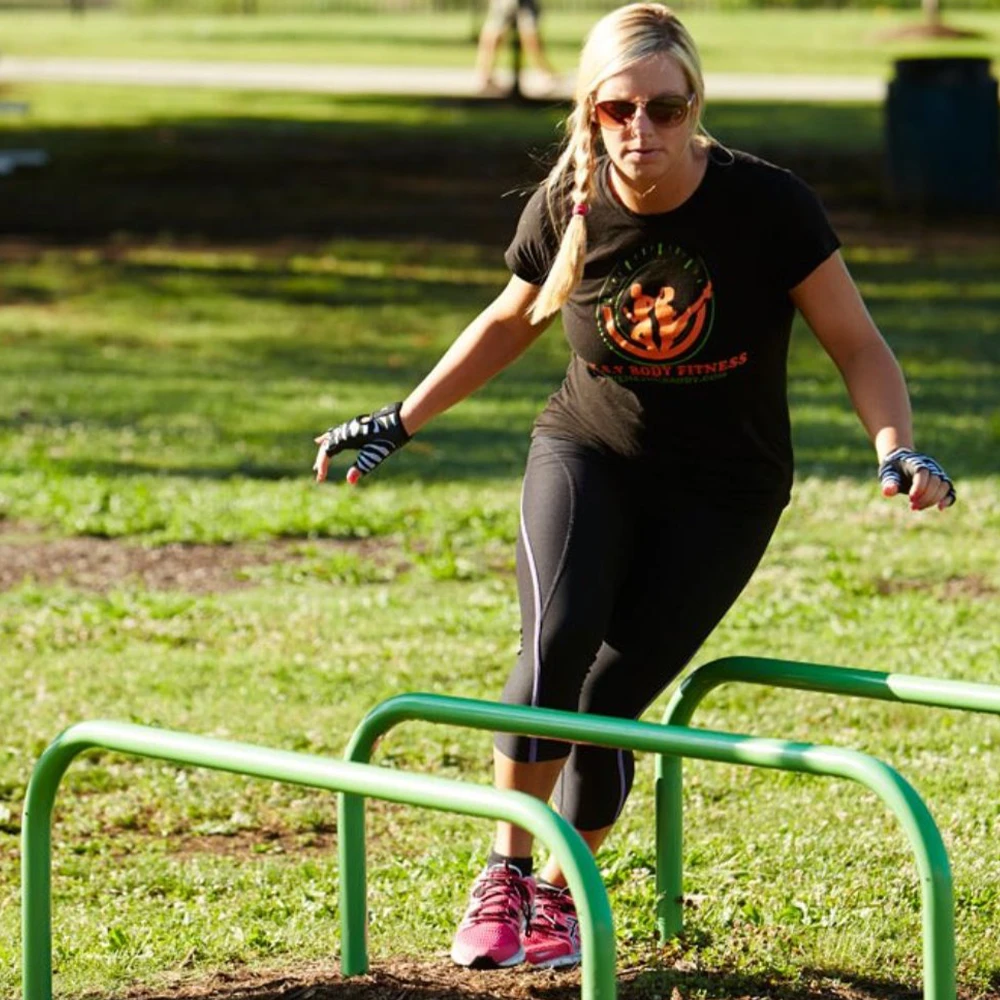 Teenagers and adults generally seek more physically demanding workout experiences. Commercial outdoor gym equipment for these age groups often focuses on cardio training, endurance, bodyweight resistance, and strength development.
Popular outdoor workout stations for teens and adults include:
- Chin-up bars
- Dip stations
- Sky walkers
- Outdoor ellipticals
- Exercise bikes
- Rowing machines
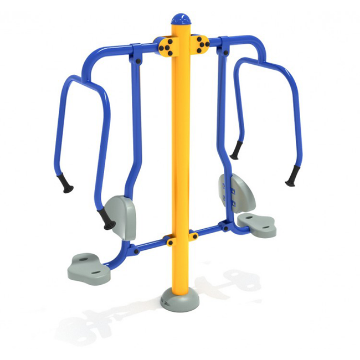
- Chest press stations
- Leg press equipment
- Multi-station fitness systems
These products are designed to handle higher user weights, larger movement ranges, and more advanced exercise routines.
Important Adult Fitness Equipment Safety Considerations
Proper User Instruction
Instructional signage helps users understand correct body positioning and exercise motions.
Equipment Spacing
Commercial outdoor fitness stations should include adequate clearance zones to prevent collisions and overcrowding.
Slip-Resistant Surfaces
Concrete pads, rubber surfacing, and textured walking areas help improve traction during workouts.
Commercial-Grade Anchoring
Outdoor gym equipment should be securely surface-mounted or in-ground mounted to reduce movement during use.
Durable Construction
Powder-coated steel frames and weather-resistant finishes help maintain long-term safety in high-traffic public environments.
Why Senior-Friendly Outdoor Fitness Equipment Is Important
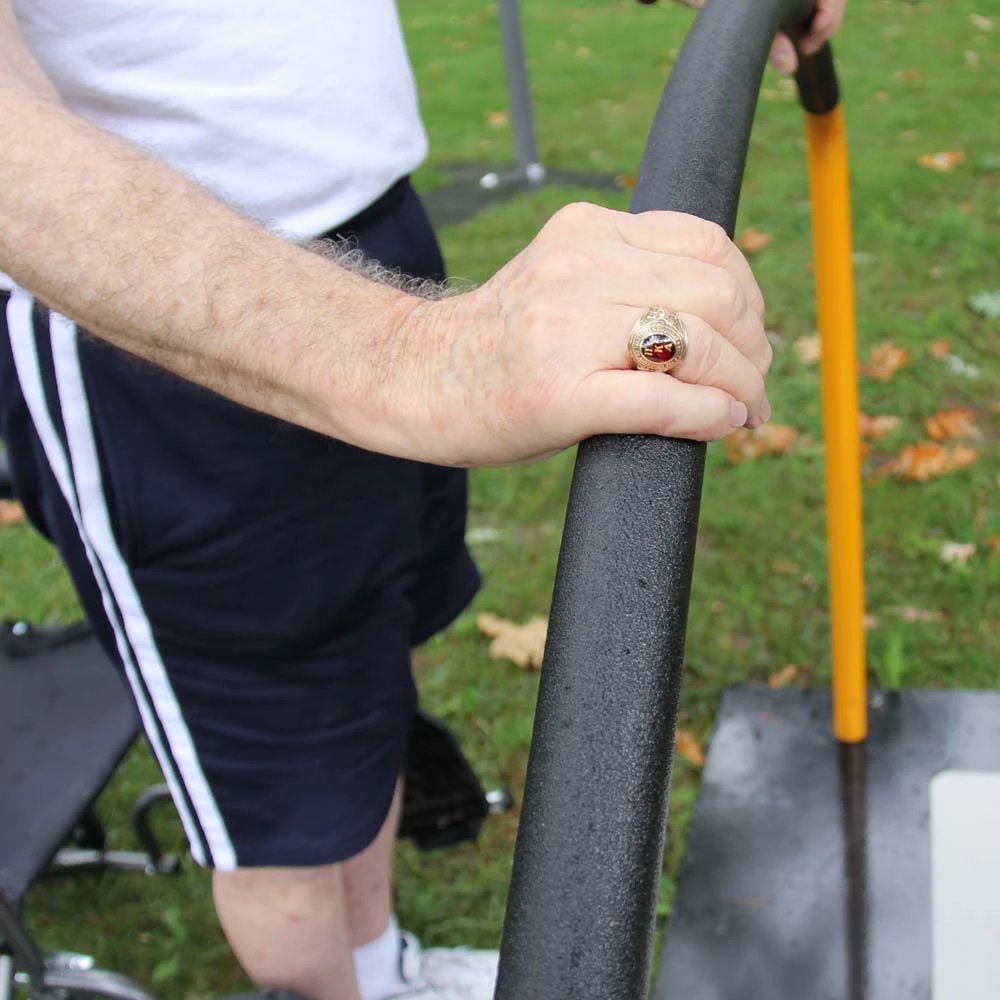 Seniors can benefit tremendously from outdoor fitness parks, especially when equipment is designed around mobility, flexibility, and low-impact exercise. As people age, balance, coordination, joint flexibility, and reaction times naturally change.
Because of this, senior-focused outdoor fitness areas should prioritize safety and accessibility above high-intensity exercise.
Popular senior-friendly outdoor fitness equipment may include:
- Tai chi wheels
- Assisted stretching stations
- Hand cycles
- Balance walks
- Mobility rails
- Accessible chest press stations
- Low-impact cardio equipment
These stations encourage physical activity while reducing stress on joints and minimizing fall risks.
Key Senior Safety Features
Support Rails and Handholds
Assisted support features help improve stability during exercise.
ADA Accessibility
Accessible outdoor fitness equipment allows users of varying mobility levels to participate safely.
Lower Resistance Movements
Low-impact exercise equipment reduces unnecessary strain on knees, hips, shoulders, and joints.
Comfortable Layout Design
Wider pathways, shaded rest areas, benches, and proper spacing help create more senior-friendly environments.
Outdoor wellness parks designed for seniors can support healthier lifestyles while encouraging social interaction and routine physical activity.
Why Surface Materials Matter for Outdoor Fitness Safety
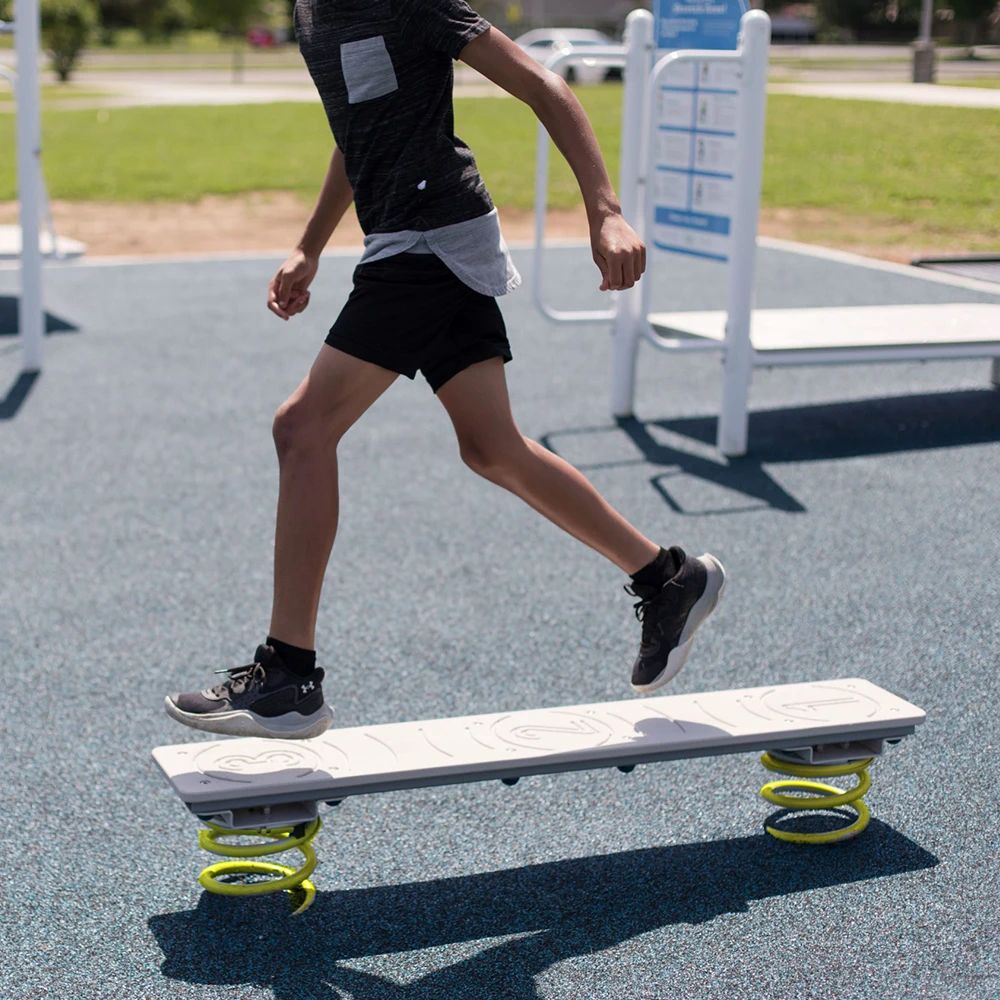 One of the most overlooked safety considerations in outdoor fitness parks is the surfacing beneath and around the equipment.
Different age groups have different fall risks, making surfacing selection extremely important.
Common outdoor fitness surfacing materials include:
- Poured-in-place rubber surfacing
- Rubber interlocking tiles
- Engineered wood fiber
- Synthetic turf systems
- Concrete installation pads
For children and seniors especially, impact-absorbing surfaces can help reduce injuries caused by slips or falls.
Proper drainage, stable sub-base preparation, and slip-resistant surfaces also improve long-term safety and usability.
Common Outdoor Fitness Park Safety Mistakes
Many outdoor fitness parks experience avoidable safety issues due to poor planning or equipment selection.
Installing Adult Equipment Near Playgrounds
Children may attempt to use equipment designed for adults, increasing injury risks.
Ignoring ADA Accessibility
Outdoor fitness spaces should accommodate users of varying mobility levels whenever possible.
Poor Equipment Spacing
Crowded fitness layouts can create unsafe workout conditions.
Lack of Instructional Signage
Users may misuse equipment without proper exercise guidance.
Choosing the Wrong Surfacing
Hard or slippery surfaces can increase fall-related injuries.
Not Considering Senior Users
Some parks focus only on athletic users while overlooking low-impact fitness options.
Avoiding these common mistakes can help create safer and more inclusive recreation spaces.
Commercial Outdoor Fitness Equipment Safety Standards
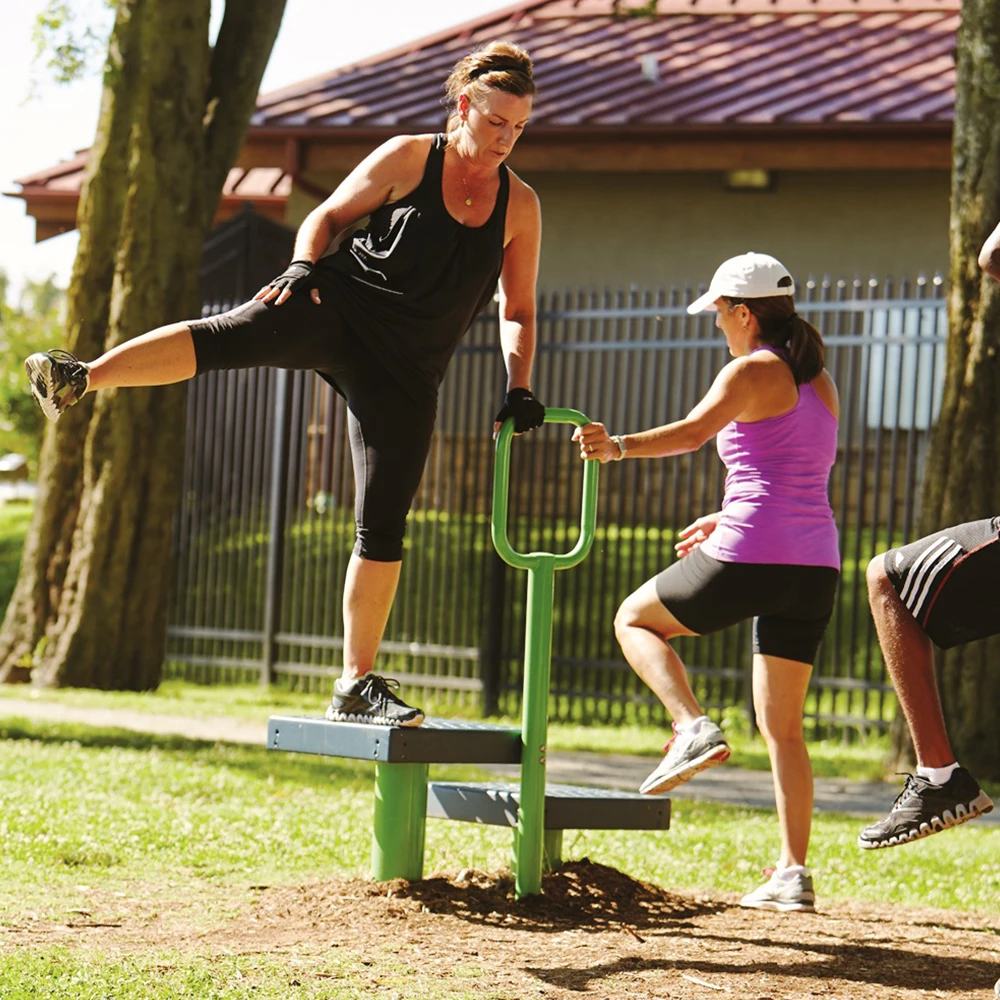 When selecting outdoor workout equipment for parks and recreation spaces, safety standards and durability should always be considered.
Commercial outdoor fitness equipment should feature:
- Heavy-duty steel construction
- Weather-resistant coatings
- Commercial-grade mounting systems
- ADA-conscious design options
- Rounded edges and safer grip points
- Clear instructional signage
- Recommended age guidelines
Many municipalities, schools, and public recreation facilities also review ADA accessibility recommendations and ASTM-related safety considerations when planning outdoor fitness installations.
Best Locations for Outdoor Fitness Parks
Commercial outdoor workout equipment can benefit many types of facilities, including:
- Public parks
- Schools
- Universities
- Military bases
- Apartment communities
- HOA recreation areas
- Campgrounds
- Wellness trails
- Senior living communities
- Corporate campuses
Designing fitness parks around the intended user demographic helps improve safety, participation, and long-term usability.
Creating Safer Outdoor Fitness Spaces for Every Generation
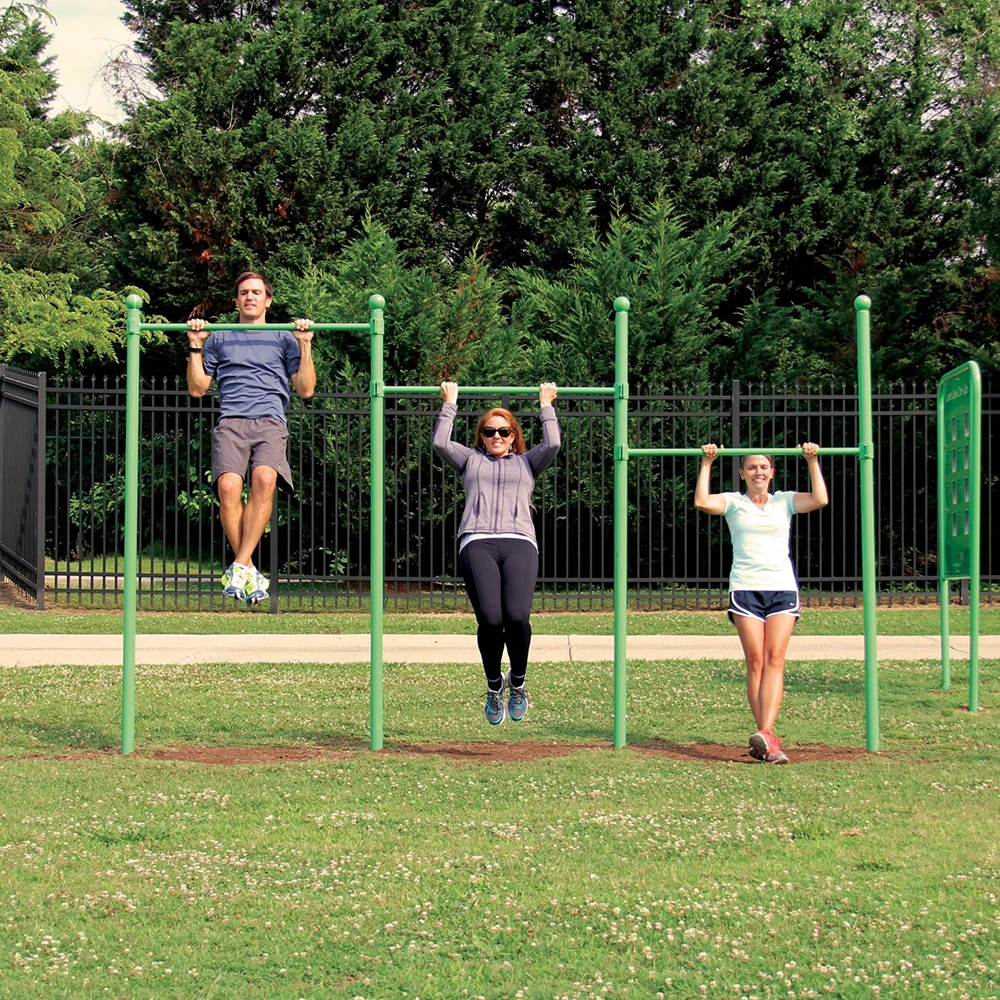 Outdoor fitness parks can provide long-term health benefits for people of all ages, but safety should always remain a top priority during the planning process.
Children need lower-profile equipment focused on coordination and movement. Teenagers and adults often require more advanced strength and cardio stations. Seniors benefit most from accessible, low-impact exercise equipment designed around balance and mobility.
By selecting age-appropriate commercial outdoor fitness equipment, using proper surfacing materials, providing instructional signage, and designing thoughtful layouts, communities can create safer outdoor wellness spaces that encourage active lifestyles for every generation.
Well-planned outdoor fitness parks not only improve physical health but also help create more welcoming, inclusive, and engaging public recreation environments for years to come.



Leave your comment